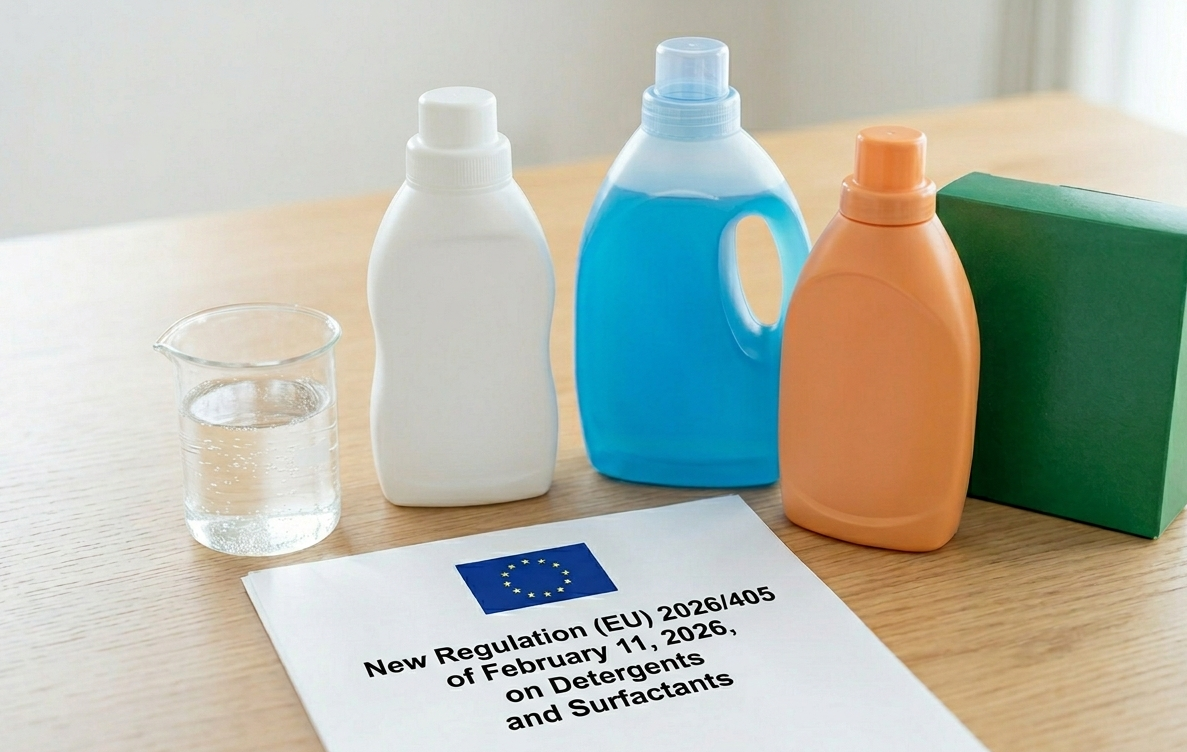
The European Union has approved Regulation (EU) 2026/405 to modernize the cleaning sector, replacing the 2004 legislation to focus on environmental sustainability, consumer safety, and digital transformation.
- Sustainability and Environmental Protection: The regulation establishes stricter environmental criteria:
-
- Total Biodegradability: While surfactant requirements remain, specific targets are set for other components. By March 23, 2032, capsules (polymeric films) must be biodegradable, followed by other high-concentration organic substances by 2034,.
- Phosphorus Control: Strict limits on phosphates and phosphorus compounds in consumer laundry and automatic dishwasher detergents are maintained to prevent eutrophication.
- Ban on Animal Testing: The marketing of products or ingredients tested on animals to comply with this standard is prohibited, prioritizing validated alternative methods.
- Product Innovation and Sales: The new rules address modern market realities:
-
- Detergents with Microorganisms: Safety regulations are established for products using bacteria as cleaning agents, ensuring the use of safe, non-genetically modified strains.
- Refill Sales: To reduce single-use plastic, bulk sales at refill stations are encouraged under strict safety and labeling regulations to prevent risks, particularly for children.
- Digital Revolution: Transparency and traceability are enhanced through technology:
-
- Digital Product Passport: Each detergent model will have an accessible digital passport to assist customs and surveillance authorities in ensuring only compliant products circulate.
- Digital Labeling: Manufacturers may use QR codes for detailed information. However, critical information regarding safety, usage precautions, and dosage must always appear on the physical label.
- Implementation Timeline: The adoption process is gradual to allow for industrial adaptation:
-
- Official Entry into Force: The regulation became official in March 2026,.
- Mandatory Application: General compliance is required starting September 23, 2029, at which point the previous regulation (648/2004) will be repealed,.
- Transition Period: Products on shelves before September 2029 can be sold indefinitely until stock is exhausted. Products introduced between September 2029 and September 2030 under the old rules may only be marketed until September 23, 2030.
Other key milestones include a Commission evaluation on further phosphorus reduction in March 2028 and the establishment of technical requirements for digital labeling by October 2028.