
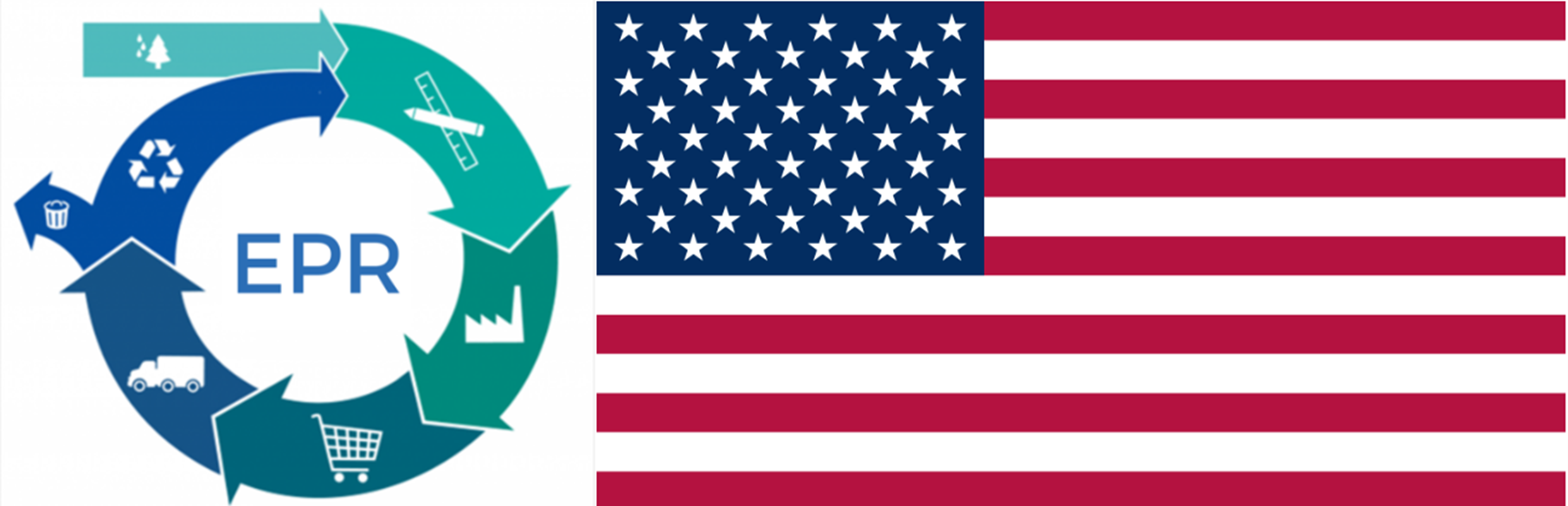
The transition toward a circular economy in the United States has moved beyond corporate statements of intent to become an inescapable regulatory reality under the new Extended Producer Responsibility (EPR) programs. In this year 2026, we find ourselves at a turning point where the management of containers and packaging has shifted from legislative theory to mandatory and binding operational implementation. This paradigm shift means that companies must no longer focus solely on supply chain efficiency; they now face an environmental governance structure that demands full financial and physical responsibility for the entire life cycle of their packaging materials.
The legislative calendar has marked May 31, 2026, as a critical date for regulatory compliance. By this deadline, producers operating in key states such as Oregon, Colorado, Minnesota, Maryland, California, and Washington must have completed their registration and data reporting processes. This convergence of deadlines reflects a coordinated movement to standardize solid waste management at the state level, forcing organizations to meticulously examine every component they introduce into the market. What is reported during this cycle will not only dictate the financial fees to be paid in 2027 but will also establish the legal precedent and methodology upon which the company’s sustainability will be evaluated in the years to come.
One of the greatest current risks is complacency regarding the complexity of the data required for EPR in packaging. Determining exactly who qualifies as a “producer” under diverse state definitions can be a legal grey area, especially regarding private label structures or direct imports. Organizations that postpone their analysis often discover too late that their packaging inventory lacks the granularity necessary to pass an audit. It is not simply a matter of totaling weights; the new regulations demand breakdowns by specific polymers, levels of post-consumer recycled content, and proof of actual recyclability. Without a defensible methodology subjected to strict quality control processes, companies expose themselves to corrections by regulatory bodies, which invariably leads to higher fees and escalating sanctions.
However, early compliance should not be seen merely as an administrative burden, but as a strategic opportunity for cost optimization and enhanced competitiveness. By addressing packaging regulations in advance, companies gain the time needed to identify eco-design bonuses and material-level exemptions. The structure of these laws is designed to incentivize sustainability; therefore, producers who demonstrate the use of low-impact materials can significantly reduce their rates. Acting now allows for a precise diagnosis, detecting which components are driving up the compliance bill and enabling design adjustments before fees become burdensome.
In this complex global scenario, the key to operating successfully lies in having an expert partner who understands the challenges of international legal frameworks.
As a consultancy specialized in Regulatory Affairs and strategic compliance for the chemical, agrifood, and healthcare industries, at Kaeltia Consulting we provide our solid experience and international vision to help companies overcome the most demanding regulatory barriers.
We invite you to contact our team to discover how we can support you in your international compliance projects, ensuring that your activities are always carried out under the highest standards of rigor and regulatory excellence.


